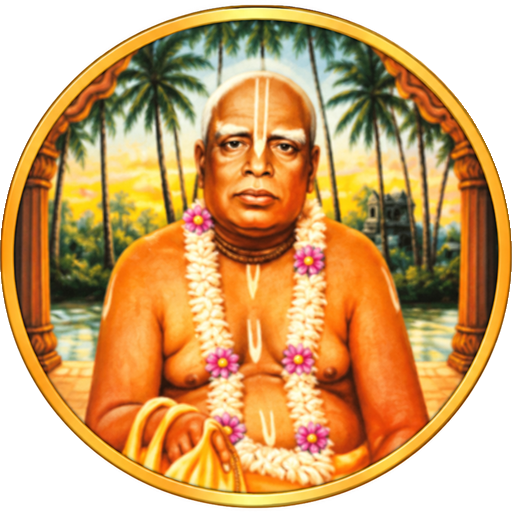
The Life and Mission of the Pioneer of Modern Gauḍīya Vaiṣṇavism (1838–1914)
❖
An authoritative editorial chronicle tracing the seventy-six years of Śrīla Bhaktivinoda Ṭhākura’s appearance in this world—from his aristocratic childhood in Ula to his solitary paramahaṁsa bhajana at Godrumadvīpa.
The SeekerThe DevoteeThe ReformerThe AuthorThe Reviver of MayapurThe Congregational PreacherThe VisionaryThe Spiritual Predecessor of the Worldwide Mission
1838 — 1852The Seeker
Birth & Childhood
The Early Years in Ula
Birnagar Ancestral Lands
On September 2, 1838, in the prosperous and culturally fertile village of Ula (now Birnagar) in the Nadia district of Bengal, Kedaranath Datta appeared in a prominent family of aristocratic heritage. His paternal lineage traced back to Purushottama Datta, a celebrated kshatriya nobleman, while his maternal grandfather, Ishwar Chandra Mustauphi, was a landed zamindar famous for philanthropy and administrative prowess.
From his earliest days, young Kedaranath possessed an extraordinarily contemplative mind. While other children were absorbed solely in play, he spent solitary hours reading historical chronicles, listening intently to the recitations of the Mahābhārata and Rāmāyaṇa, and questioning elders about the nature of God, the soul, and mortality. When severe fever epidemics swept through Ula, decimating entire families and leaving his mother in financial hardship, the young boy confronted the stark impermanence of the material world with remarkable spiritual poise.
Historical Documentation
Ula was historically celebrated for its annual celebrations and vast scholarly gatherings.
The family belonged to the esteemed Kayastha nobility of Bengal.
Key Milestones
❖September 2, 1838: Born at Ula, Nadia
❖Early home schooling and mastery of Bengali and Sanskrit verses
❖1850–1852: Tragic loss of elder siblings and father
1852 — 1860The Seeker
Education and Intellectual Search
Encountering the Bengal Renaissance in Calcutta
In 1852, Kedaranath relocated to Calcutta to reside in the home of his maternal uncle and pursue higher schooling. Entering the prestigious Hindu College in 1856, he entered the epicentre of the Bengal Renaissance. He devoured Western philosophy, Western history, astronomy, and English poetry, reading Milton, Shakespeare, Carlyle, and the British rationalists with voracious intensity.
He developed friendships with influential contemporary intellectuals, including Dwijendranath Tagore and Ishwar Chandra Vidyasagar. Yet while many of his educated peers succumbed to superficial Western skepticism or abandoned their ancestral roots, Kedaranath remained anchored in a deep moral inquiry. He analyzed Western theology alongside Hindu traditions, searching for an ontology that satisfied both rigorous reason and the innate spiritual longing of the soul.
“I read all the philosophical treatises I could obtain, both Western and Eastern. But the heart remained thirsty until it met the pure nectar of the Bhāgavata.”
1860 — 1866The Seeker
Teacher and Scholar
Literary Awakening and Early Service in Orissa
Following his marriage and the completion of his studies, Kedaranath accepted teaching positions in rural Bengal and Orissa. He established an English school in Kendrapara and later taught in Midnapore, gaining immediate renown for his pedagogical skill, commanding moral character, and literary command.
During this phase, he wrote historical essays, English poems, and philosophical tracts. His early publications, such as 'The Mathas of Orissa' and 'Our Wants', displayed an incisive analytical mind capable of diagnosing social and spiritual decay with uncommon clarity. He witnessed firsthand how centuries of neglect had permitted distortion to creep into religious institutions, strengthening his inner resolve to seek out the unadulterated roots of truth.
1866 — 1870The Reformer
Government Service
The Magistrate of Uncompromising Duty
In 1866, through competitive examination and exceptional administrative merit, Kedaranath Datta was appointed Deputy Magistrate and Deputy Collector by the Government of Bengal. Over the subsequent three decades, he served in key administrative districts including Chapra, Purnia, Dinajpur, Narail, and Midnapore.
In an era when corruption and colonial servility were rampant, Magistrate Datta stood as a beacon of strict impartiality, scrupulous honesty, and prompt justice. He was renowned for resolving long-standing boundary disputes in hours and protecting poor tenant farmers from the rapacity of predatory landlords. British commissioners routinely acknowledged him as one of the finest judicial minds in the civil service.
Historical Documentation
Kedaranath Datta served under six British Lieutenant Governors of Bengal.
His daily regimen was legendary: rising at 4:00 AM, spending hours in private japa and study, working from 9:30 AM to 5:00 PM in court, and spending evenings in writing and correspondence.
He never accepted bribes or political favors, maintaining complete moral independence throughout his career.
1868 — 1870The Devotee
Turning Toward Śrī Caitanya Mahāprabhu
The Unveiling of the Golden Avatāra
During his posting at Dinajpur in 1868, Kedaranath obtained authentic manuscript copies of Śrīmad-Bhāgavatam and Kṛṣṇadāsa Kavirāja Gosvāmī's Śrī Caitanya-caritāmṛta. Until this moment, his knowledge of Caitanya Mahāprabhu had been clouded by the prevailing prejudices of Calcutta's anglicized elite, who viewed Vaiṣṇavism as an emotional cult of the uneducated.
As he studied the monumental philosophical dialogues of Caitanya-caritāmṛta—particularly Mahāprabhu's teachings to Rūpa and Sanātana Gosvāmīs and the conversation with Rāmānanda Rāya—the veil was lifted. He realized with boundless ecstasy that Sri Caitanya's philosophy of Acintya-bhedābheda-tattva was the supreme culmination of all Vedic revelation, marrying rigorous Vedāntic epistemology with the highest transcendental love of God.
“When I studied the works of Śrī Rūpa, Sanātana, and Kavirāja Gosvāmī, my heart became captured forever by Śrī Caitanya Mahāprabhu. I recognized in Him the Supreme Lord Himself, descending to bestow the highest prema.”
1870 — 1874The Reformer
Jagannātha Purī
Guardian of the Sacred Dhāma and Apprehension of Bisakisen
In 1870, the Bengal government appointed Kedaranath Datta as Deputy Magistrate of Jagannātha Purī and special government superintendent of the historic temple of Lord Jagannātha. For four years he oversaw the safety, cleanliness, and administrative integrity of the great pilgrimage center, resolving intricate disputes among thousands of servitors with profound patience and scholarship.
It was during this tenure that he faced his most famous judicial test: the trial of Bisakisen, a rogue mystic yogi who claimed to be an incarnation of Mahā-Viṣṇu, terrorizing local villages and inciting rebellion against the state. Undeterred by occult curses that struck his own household with high fevers, Kedaranath personally investigated the imposter, apprehended him in the jungle, and conducted a fearless public trial that dismantled the charlatan's influence and restored peace to Orissa.
1874The Spiritual Predecessor of the Worldwide Mission
Family and the Birth of Bimala Prasad
A Prayer Answered: The Advent of the Lion Guru
Deeply conscious of the urgent need for pure, uncompromising preaching to stem the tide of materialistic hedonism and sectarian deviation, Bhaktivinoda had prayed intensely at the lotus feet of Lord Jagannātha: 'My Lord, grant me a ray of Your divine energy who can take up the mantle of Mahāprabhu's mission and establish it across the world.'
On February 6, 1874, in Purī, his fourth son was born, whom he named Bimala Prasad (meaning 'the pure mercy of Śrīmatī Bimalā-devī'). During the annual Ratha-yātrā festival when the child was six months old, the giant chariot of Lord Jagannātha came to a mysterious stop directly before their residence. For three full days the chariot refused to budge. The mother carried the infant up to the cart and placed him at the feet of Lord Jagannātha; at that instant, a heavy garland slipped from the Lord's neck and wrapped around the baby. That child would grow to become the revolutionary ācārya Śrīla Bhaktisiddhānta Sarasvatī Ṭhākura.
Key Milestones
❖February 6, 1874: Birth of Bimala Prasad in Jagannātha Purī
❖Lord Jagannātha's chariot garland falls directly on the infant
❖Dedicated training in Sanskrit grammar, astronomy, and śāstra under his father's personal guidance
1880 — 1885The Devotee
Spiritual Relationships
Association with the Masters of the Gauḍīya Lineage
In 1880, Kedaranath Datta formally accepted initiation into the sacred mantra tradition from Śrīla Bipin Vihārī Gosvāmī, a descendant of the Jāhnavā-parivāra. While observing all traditional etiquette toward his dīkṣā-guru, he found supreme spiritual guidance, inspiration, and ecstatic communion at the feet of the venerable paramahaṁsa Śrīla Jagannātha Dāsa Bābājī Mahārāja.
Śrīla Jagannātha Dāsa Bābājī was the undisputed spiritual leader of the entire Gauḍīya Vaiṣṇava community. Though advanced beyond a hundred years and physically frail, his devotion to the Holy Name burned like a blazing sun. Bhaktivinoda revered him as his śikṣā-guru and ultimate spiritual authority, consulting him on every momentous decision regarding the revival of Navadvīpa and the defense of the sampradāya.
1879 — 1890The Author
Literary Mission
A Modern Renaissance of Gauḍīya Scholarship
From 1879 onwards, a torrent of sublime literary output flowed from Bhaktivinoda's pen. His breakthrough masterpiece, Śrī Kṛṣṇa-saṁhitā (1879), presented the ontology of Bhagavān and the historical credibility of the Bhāgavata tradition in a format that modern intellectuals could not dismiss. Celebrated thinkers across India hailed the work as a triumph of philosophical synthesis.
In 1886, he released Śrī Caitanya-śikṣāmṛta, followed by annotated editions of the Bhagavad-gītā with Viśvanātha Cakravartī Ṭhākura's commentaries, the Caitanya Upaniṣad of the Atharva Veda, and Śrī Navadvīpa-dhāma-māhātmya. His writings bridged centuries: they preserved the confidential rasika nectar of Rūpa and Raghunātha dāsa Gosvāmīs while utilizing clear, lucid prose suited for contemporary seekers.
1881 — 1899The Author
Sajjana-toṣaṇī
The Journal That Awakened Bengal
In 1881, Bhaktivinoda established the monthly spiritual periodical Sajjana-toṣaṇī ('That Which Delights Pure Devotees'). Serving as editor, principal contributor, and publisher, he utilized the journal to systematically refute deviant sects (such as the sahajiyās, bāuls, and kartābhajā-groups) whose debased practices had brought disrepute upon the name of Gauḍīya Vaiṣṇavism.
Through Sajjana-toṣaṇī, the Ṭhākura introduced historical research, serialized forgotten ancient commentaries, published his own devotional songs, and shared reports from the growing Nāma-haṭṭa network. The journal laid the foundation for modern religious journalism in India and was later continued in English by Śrīla Bhaktisiddhānta Sarasvatī as 'The Harmonist'.
1887 — 1892The Reviver of Mayapur
Search for Mahāprabhu's Birthplace
Historical Research and Divine Intuition
The Yoga-pīṭha Shrine at Śrī Mayapur
Following the shifting courses of the sacred river Ganges over four centuries, the exact location of Śrī Caitanya Mahāprabhu's birthplace in Navadvīpa had become obscured by floods and rival claims. Local residents had wrongly come to believe that modern modern town of Navadvīpa on the western bank was the ancient site, ignoring historical texts which clearly established that Mahāprabhu appeared on the eastern bank.
Driven by divine necessity, Bhaktivinoda Ṭhākura spent years cross-referencing ancient texts such as Caitanya-bhāgavata, Caitanya-caritāmṛta, Bhakti-ratnākara, and 18th-century British revenue survey maps. Late one evening in 1888, while absorbed in meditation on the roof of his residence at Krishnanagar, he observed across the Jalangi river a brilliant, luminous effulgence emanating from a quiet grove in Mayapur.
1893 — 1894The Reviver of Mayapur
Establishing Śrī Mayapur
The Ecstasy of Jagannātha Dāsa Bābājī and the Yoga-pīṭha
To resolve all doubt beyond the shadow of human speculation, Bhaktivinoda invited his venerable śikṣā-guru, Śrīla Jagannātha Dāsa Bābājī Mahārāja, to inspect the discovered site at Mayapur. The Bābājī, over one hundred years of age, was so elderly that his disciples carried him everywhere in a wicker basket.
When the procession arrived at the mound under a grand neem tree identified by Bhaktivinoda's research, a transcendent miracle occurred. Suddenly, the venerable saint leaped out of his basket into the air, dancing in uncontrollable ecstasy and weeping copious tears, shouting: 'Ei to Gaura-janma-bhūmi! Ei to Gaura-janma-bhūmi!' ('Here is the birthsite of Lord Gaura!'). All doubts were dispelled. Bhaktivinoda soon established the Śrī Mayapur Seva Samiti, constructed a sacred shrine, and installed deities of Gaura-Viṣṇupriyā.
1891 — 1898The Congregational Preacher
Godruma and Nāma-haṭṭa
The Marketplace of the Holy Name in Every Village
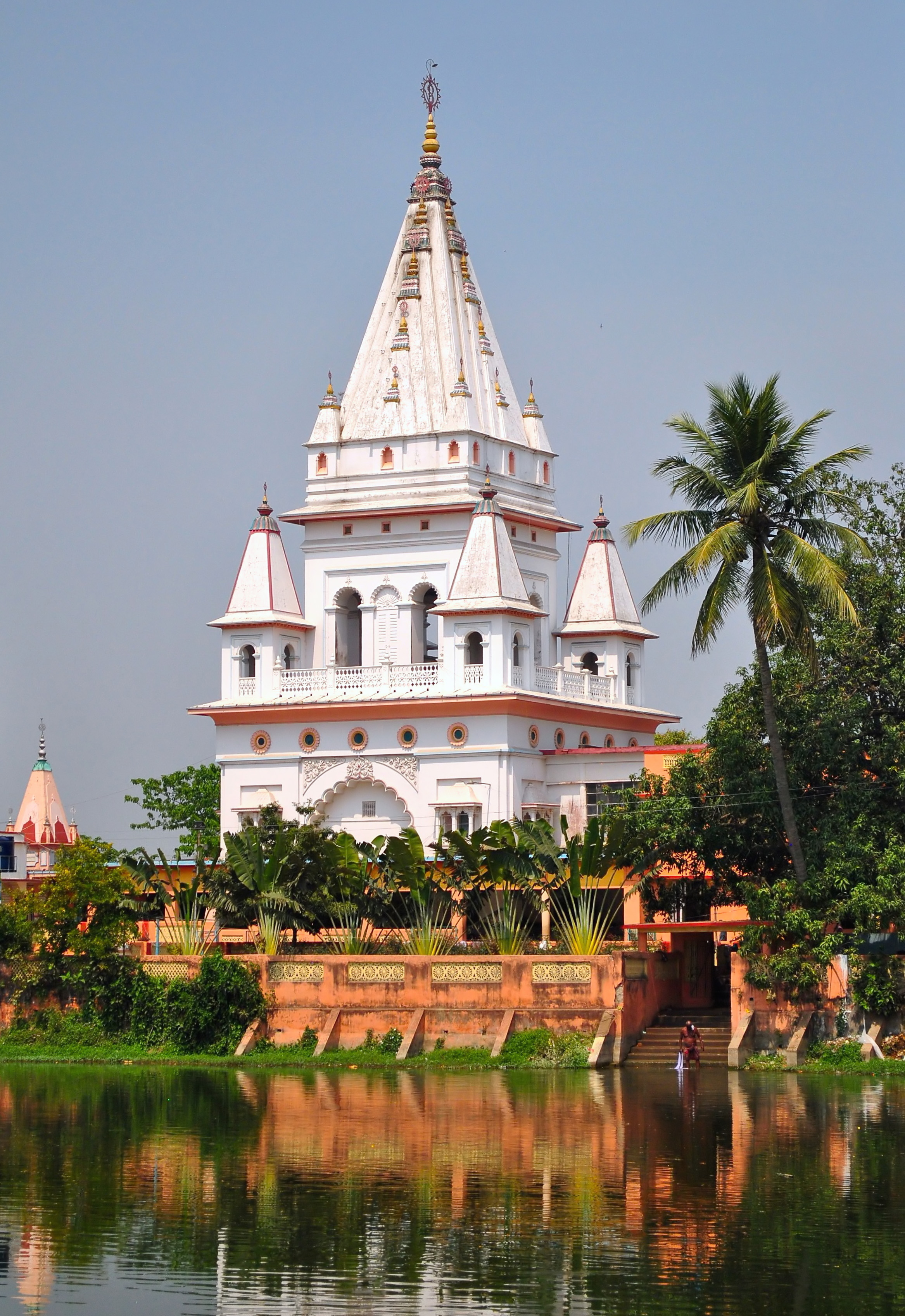
In Godrumadvīpa, one of the nine sacred islands of Navadvīpa, Bhaktivinoda established his spiritual headquarters at Śrī Svānanda-sukhada-kuñja. From this peaceful grove, he launched his most impactful grassroots pastoral initiative: the revival of Lord Nityānanda's Nāma-haṭṭa ('Marketplace of the Holy Name').
The Nāma-haṭṭa systematically decentralized devotion. Bhaktivinoda authored a manual of organization, appointing traveling ministers, accountants, and teachers to oversee hundreds of local assemblies. Householders met in village squares and family courtyards to chant the mahā-mantra, study the Bhagavad-gītā, and cultivate practical Vaiṣṇava ethics, creating an egalitarian revolution of love across Bengal.
1896The Visionary
Vision for Worldwide Preaching
Sending Mahāprabhu's Word Across the Oceans
While immersed in rural preaching, Bhaktivinoda looked far beyond the borders of India. In 1896, he composed a concise, eloquent English monograph entitled 'Sri Chaitanya Mahaprabhu: His Life and Precepts'. He shipped copies to the royal library in London, McGill University in Montreal, and academic centers throughout Europe and America.
In Sajjana-toṣaṇī, he penned his prophetic yearning: 'When will that day arrive when the fair-skinned gentlemen of England, France, Russia, Prussia, and America will embrace their Indian brothers in the streets of Mayapur, singing together: Śacīnandana! Śacīnandana!?' He foresaw that Mahāprabhu's prophecy—that His holy name would be sung in every town and village on earth—would surely be realized through an empowered global mission.
1893 — 1902The Author
Mature Literary Period
Jaiva Dharma, Hari-nāma-cintāmaṇi, and Śaraṇāgati
The decade surrounding the turn of the century witnessed the pinnacle of Bhaktivinoda's theological output. In 1896 he released Jaiva Dharma, universally recognized as one of the greatest masterpieces of religious literature. Set as philosophical dialogues between realized ascetics on the banks of the Ganges, the book answers every existential question regarding the soul, illusion, divine relationships, and spontaneous devotion.
Simultaneously, he published his immortal songbooks—Śaraṇāgati and Gītāvalī—distilling the deepest mood of surrender into simple, haunting Bengali poetry. In 1900, while staying at his oceanfront bhajana-kuṭīra in Jagannātha Purī, he published Hari-nāma-cintāmaṇi, uncovering the definitive science of the Holy Name as taught by Haridāsa Ṭhākura.
1902 — 1913The Devotee
Later Years and Bhajana
Seclusion in Godrumadvīpa and Paramahaṁsa Absorption
As the years advanced, Bhaktivinoda gradually withdrew from public assemblies and administrative duties. In 1908, he adopted the dress of a renounced bābājī (bābājī-veṣa) under the inspiration of Śrīla Gaura Kiśora Dāsa Bābājī, absorbing himself in intense internal meditation (līlā-smaraṇa) and continuous chanting of the Holy Name at Svānanda-sukhada-kuñja.
Devotees from near and far came to seek his blessing and catch a glimpse of his saintly presence. Even in physical stillness, his spiritual effulgence and gravity were palpable. He entrusted the care of the publications and the continuation of the Mayapur mission to his son, Śrīla Bhaktisiddhānta Sarasvatī, who had taken a vow to chant one billion names of the Lord at the Yoga-pīṭha.
June 23, 1914The Devotee
Disappearance
Entering the Eternal Pastimes of the Lord
On June 23, 1914, on the auspicious disappearance day of Śrī Gadādhara Paṇḍita, Śrīla Bhaktivinoda Ṭhākura concluded his earthly pastimes in Calcutta. As he entered the eternal realm of Goloka Vṛndāvana, a profound silence enveloped the Gauḍīya Vaiṣṇava world.
His divine mortal form was conveyed with supreme devotion to Śrī Svānanda-sukhada-kuñja in Godrumadvīpa, where his sacred samādhi mandira was erected amidst the groves he loved so dearly. There he rests forever in eternal samādhi, showering uninterrupted blessings upon every sincere soul who takes shelter of the Holy Name.
1914 — PresentThe Spiritual Predecessor of the Worldwide Mission
Continuing Legacy
From Godruma to the Global Stage
The seeds planted by Bhaktivinoda Ṭhākura did not remain dormant. His son, Śrīla Bhaktisiddhānta Sarasvatī Ṭhākura, expanded the mission into sixty-four Gauḍīya Maṭha centers across India, training disciples and sending missionaries to Europe. And in 1965, at the age of sixty-nine, Śrīla A.C. Bhaktivedanta Swami Prabhupāda sailed aboard the Jaladuta to New York City, carrying the books, songs, and vision of Bhaktivinoda Ṭhākura to the Western world.
Today, in every corner of the globe, devotees chant the songs from Śaraṇāgati, study Jaiva Dharma, and assemble by the hundreds of thousands every year at Śrīdhāma Māyāpur. What began in the heart of a solitary magistrate on the banks of the Ganges has become an international spiritual civilization of love.
Primary Sources & Editorial Documentation
This biographical presentation is compiled directly from the following authoritative primary works and historical archives:
Svalikhita-jīvanī (Autobiography)
Śrīla Saccidānanda Bhaktivinoda Ṭhākura · Written 1896; published posthumously by Lalita Prasada Datta, 1916 (1896)
The primary autobiographical account written by the Thakura at the request of his son, detailing his life up to 1894.
This website gathers historical, theological, bibliographical, and audiovisual material about
Śrīla Saccidānanda Bhaktivinoda Ṭhākura from authoritative sources.
If you have authentic references, historical material, archival photographs, or have noticed
an inaccuracy, we warmly welcome your seva.
Authentic references and supporting sources are especially helpful.