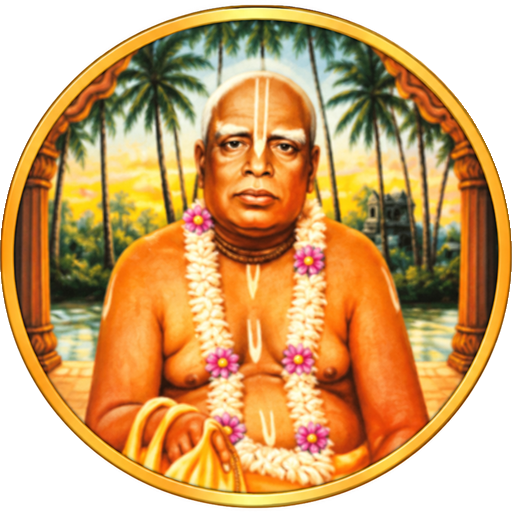
Daśa-mūla-tattva
Formulated by Śrīla Bhaktivinoda Ṭhākura from the teachings of Śrī Caitanya Mahāprabhu, Daśa-mūla crystallizes the boundless ocean of Vedic literature into one supreme epistemological axiom (Pramāṇa) and nine demonstrable ontological truths (Prameya).
Pramāṇa (Epistemological Foundation)
Direct perception (pratyakṣa) and logical inference (anumāna) are inevitably flawed by four human defects: illusion, mistakes, imperfect senses, and cheating propensity. Therefore, infallible spiritual truth must descend through divine sound transmitted by authorized masters.
Prameya: Sambandha-tattva (Truths 2 to 8)
Kṛṣṇa is the Supreme Absolute Truth
Lord Śrī Hari (Kṛṣṇa) is the singular, supreme, non-dual Absolute Truth, the cause of all causes.
He is Svayaṁ Bhagavān, possessed of all opulences, the master of all energies, and the object of all love and devotion.
Kṛṣṇa Possesses All Inconceivable Energies
The Lord is possessed of infinite energies (sarva-śaktimān), primarily divided into internal spiritual energy (cit-śakti), marginal energy (jīva-śakti), and external material energy (māyā-śakti).
Through His inconceivable potency (acintya-śakti), Kṛṣṇa remains immutable and eternally personal while creating and maintaining infinite cosmic manifestations.
Kṛṣṇa is the Reservoir of All Rasa
Kṛṣṇa is the personification of all transcendental mellows (akhila-rasāmṛta-mūrti), eternally sporting in Goloka Vṛndāvana.
All loving relationships found in the material world are dim reflections of the five primary transcendental rasas (peace, servitude, friendship, parental affection, and conjugal love) experienced eternally with Kṛṣṇa.
The Jīvas are Minute Separated Parts
The individual living entities (jīvas) are infinitesimal separated conscious parts (vibhinnāṁśa) of the Supreme Lord, belonging to His marginal potency.
Because the soul is a spark of consciousness, it possesses minute free will, capable of choosing between the shelter of the spiritual realm and entanglement in material energy.
Some Jīvas are Bound by Māyā
Conditioned souls have forgotten their eternal relationship with Kṛṣṇa and are consequently bound by the three modes of material nature (māyā).
Due to the aversion to Kṛṣṇa, the conditioned jīva takes on temporary material bodies, experiencing repeated birth, old age, disease, and death across 8,400,000 species of life.
Some Jīvas are Eternally Liberated
Liberated souls are eternally engaged in loving service to Kṛṣṇa, residing in the spiritual world free from material contamination.
Conditioned souls can regain this liberated status through the practice of devotional service and the causeless mercy of the spiritual master and Lord Caitanya.
Inconceivable Simultaneous Oneness and Difference
The relationship between Kṛṣṇa, His energies, the living entities, and the cosmos is Acintya-bhedābheda-tattva—inconceivably one and yet eternally distinct.
Just as sunlight is non-different from the sun in quality yet distinct in quantity, the jīva and the creation are simultaneously one in spiritual essence with Kṛṣṇa yet eternally subordinate and distinct.
Pure Devotional Service is the Only Practice
Unalloyed devotional service (śuddha-bhakti), centered on the hearing and chanting of the Holy Name, is the sole means (abhidheya) to attain the Supreme Lord.
Devotional practice is free from the taint of fruitive work (karma) and dry intellectual speculation (jñāna), performed exclusively for the pleasure of Śrī Kṛṣṇa.
Pure Love of God is the Ultimate Goal
Ecstatic, unalloyed love of Godhead (kṛṣṇa-prema) is the supreme ultimate goal of human existence (prayojana).
All four traditional goals of human life (dharma, artha, kāma, mokṣa) are insignificant compared to the fifth goal: pure love of Kṛṣṇa, where the soul eternally drinks the nectar of divine seva in Goloka Vṛndāvana.