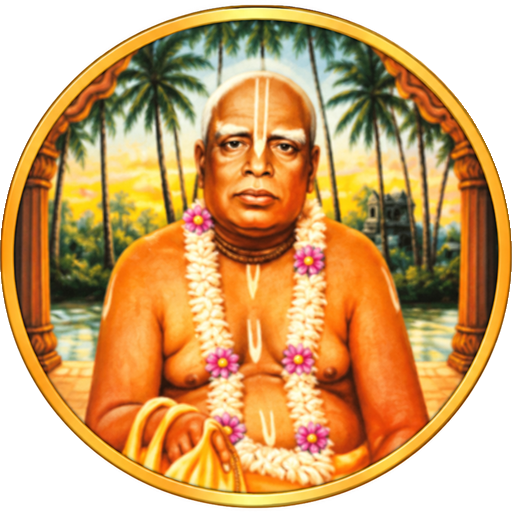
Nāma-tattva: The Science of the Holy Name
The Holy Name of Kṛṣṇa is identical with the Supreme Lord Himself, descending as the supreme spiritual medicine and universal spiritual process for this age.
Śrīla Bhaktivinoda Ṭhākura systematically organized the teachings of Śrī Caitanya Mahāprabhu and the Six Gosvāmīs into practical, progressive pathways accessible to truth-seekers, householders, and seasoned spiritual practitioners alike.
Spiritual life is an organic awakening from self-realization to ecstatic divine love. Explore his teachings through six progressive spiritual questions.
Recognize that your true self is not the temporary physical body or restless mind, but an eternal conscious particle of spiritual light whose natural function is pure love.
Transcend dry abstractions of the Divine to encounter Śrī Kṛṣṇa and Śrī Caitanya Mahāprabhu—the supreme reservoir of beauty, compassion, and all-attractive qualities.
Spiritual life begins with genuine humility—taking shelter of an authentic spiritual master, honoring the Vaiṣṇavas, and learning to serve with love.
Awaken dormant spiritual love through the sublime chanting of the Hare Kṛṣṇa mahā-mantra, mindful japa without offenses, and steady contemplative practice.
Integrate your daily vocation, family life, and societal service into an unbroken offering of love, as exemplified by Bhaktivinoda's own magistrate life.
Join the marketplace of the Holy Name (Nāma-haṭṭa), sharing the joyful tidings of divine love with friends, neighbors, and truth-seekers worldwide.
Formulated by Śrīla Bhaktivinoda Ṭhākura from the teachings of Śrī Caitanya Mahāprabhu, Daśa-mūla crystallizes the entire Vedic canon into one foundational axiom (Pramāṇa) and nine demonstrable truths (Prameya).
Explore the complete collection of foundational philosophical truths.
The Holy Name of Kṛṣṇa is identical with the Supreme Lord Himself, descending as the supreme spiritual medicine and universal spiritual process for this age.
Just as a disease prevents the tongue from tasting sugar candy, offenses to the Holy Name block the soul from tasting spiritual sweetness. Overcoming the ten offenses restores pure devotional taste.
Full surrender to Kṛṣṇa is not passive fatalism, but the active dedication of mind, body, home, and destiny to the care and guidance of the Supreme Lord.
True renunciation (yukta-vairāgya) does not mean artificially suppressing the senses, but engaging them completely in the service of Lord Kṛṣṇa.
Pure devotional service is causeless and uninterrupted (ahaituky apratihatā), entirely independent of material birth, gender, caste, scholarship, or wealth.
Bhaktivinoda Ṭhākura rigorously defended pure Gauḍīya siddhānta, warning against artificial displays of ecstasy and cheap imitation of intimate divine pastimes.
This website gathers historical, theological, bibliographical, and audiovisual material about Śrīla Saccidānanda Bhaktivinoda Ṭhākura from authoritative sources. If you have authentic references, historical material, archival photographs, or have noticed an inaccuracy, we warmly welcome your seva.
Authentic references and supporting sources are especially helpful.
Write to Us